
Hornworms & garden caterpillars
Tomato and tobacco hornworms are the biggest larvae in the garden, on tomatoes, peppers, potatoes and eggplant. Cabbage loopers and imported cabbageworms do the same to cole crops.
What to look for
Leaves and fruit chewed overnight, dark pellet droppings on the leaves below, and well-camouflaged green caterpillars (hornworms carry a horn at the tail).
The plan, step by step
- 1
Hand pick
Pick off what you can find; the droppings show where to look.
- 2
Spray
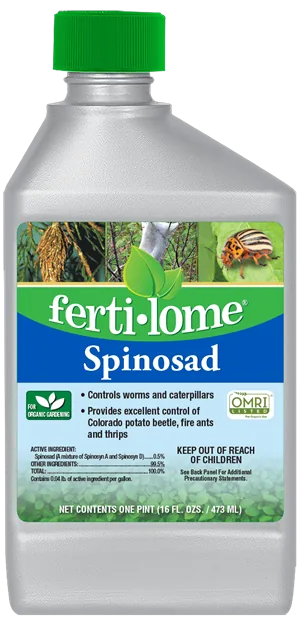
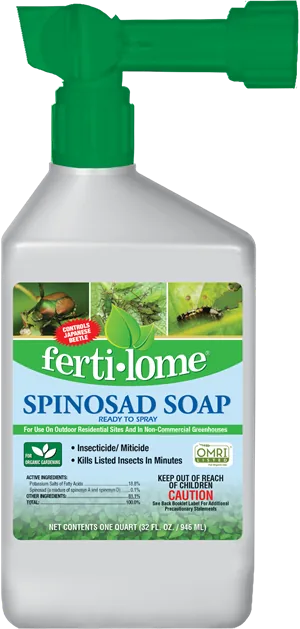
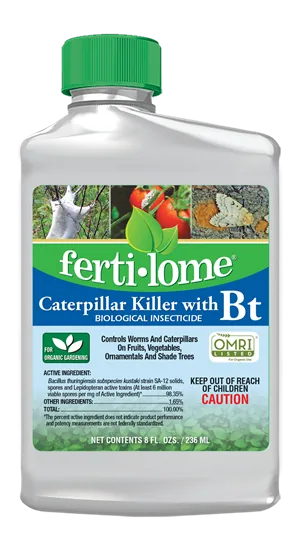
Ferti-lome Spinosad soaks into the leaf, so rain cannot wash it off, and it is gentle on people and pets. Spinosad Soap and Caterpillar Killer (Bt) are good alternatives.

More insects
All problemsAphids
Small, soft, pear-shaped sap feeders in green, yellow, red, gray or black. They can go from newborn to breeding in about 8 days, so a few become a colony fast.
7 products in stock: Triple Action, Triple Action Plus RTU, Tree & Shrub Drench…How to fix itArmyworms in the lawn
Moth larvae that eat grass blades around the clock and can strip a lawn in a few days. Largely a Southern pest, especially on bermudagrass — and a fall regular on Florida St. Augustine.
6 products in stock: Bug Blaster II Granules, Spinosad, Spinosad Soap RTS…How to fix itChinch bugs
Rice-grain-sized bugs that suck the sap out of grass until it withers. In the South they prefer St. Augustine, and there can be three or more generations a year.
6 products in stock: Turf Ranger II, Grub Free Zone III, Grub Free Zone…How to fix it